




November 6, 2026 / Dental Implant Education
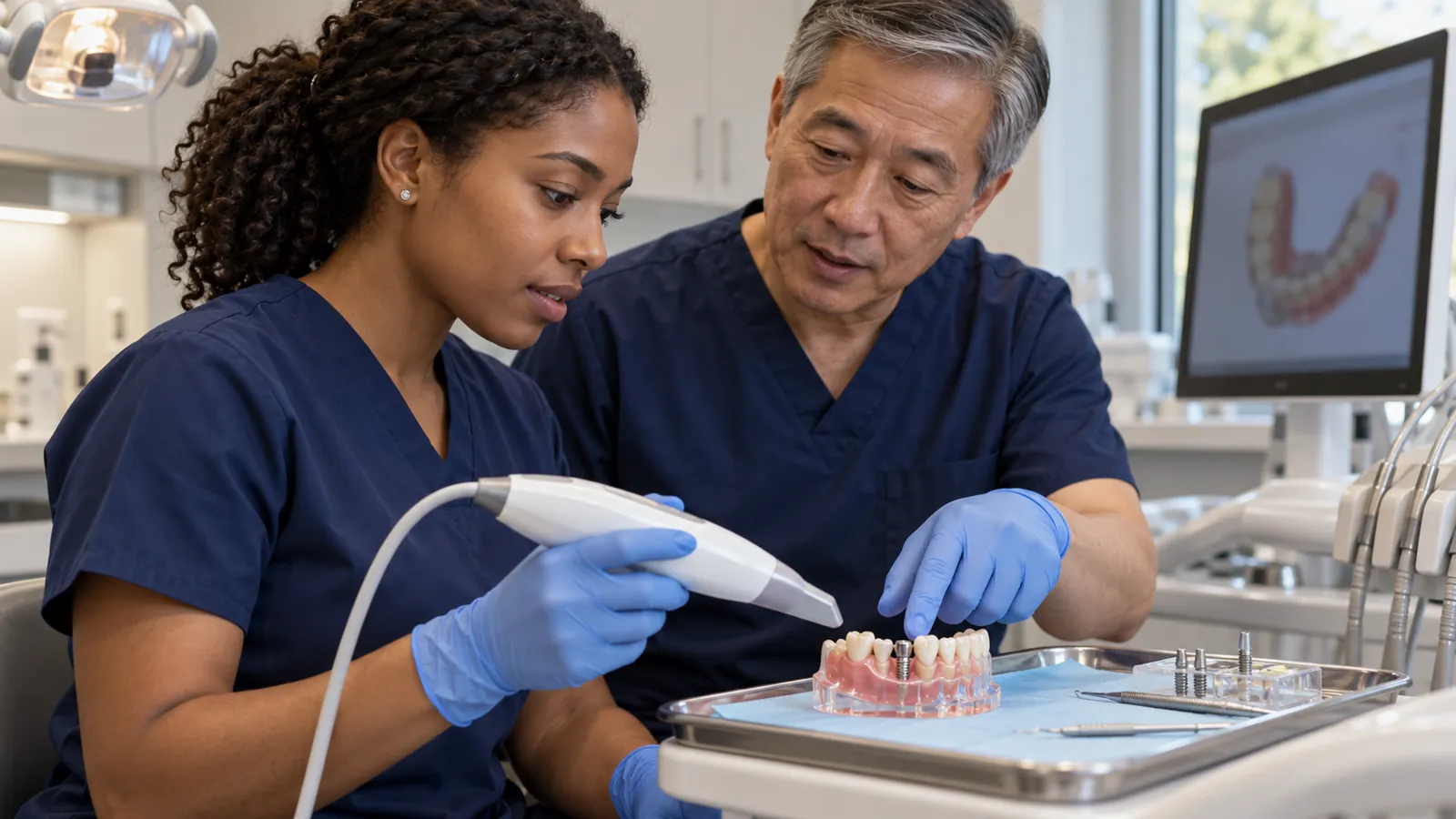
Digital workflows belong in dental implant education because they connect the information gathered about a patient with treatment planning, communication and review. Learning to use a planning tool is part of that process. Learning to judge the information going into it, explain a proposed plan and recognise when you need further guidance is just as important.
For a practising dentist, the question is therefore broader than which software a course demonstrates. It is whether the learning experience helps you understand how digital steps fit into clinical decisions and supervised skill development.
The implant residency at Fusion Implant Dentistry includes digital integration alongside hands-on learning and mentorship. When considering this kind of dental implants education, it helps to arrive with specific questions about what you want to learn and how that learning will be supported.
A digital workflow is a connected sequence of information and decisions. In an educational setting, that might involve reviewing records, discussing the intended restoration, examining a proposed plan and communicating it to the people involved in care.
Those connections are worth studying in their own right. A learner may understand how to navigate a program without yet being able to explain why a particular plan is appropriate. Equally, a dentist may be comfortable with the clinical reasoning but need guidance on how information moves between the practice, a mentor and a laboratory.
A useful learning exercise makes that sequence visible. What information was available at the start? What was missing? Which assumptions needed checking? Who reviewed the proposal, and what changed as a result?
These questions keep the emphasis on decisions. They also help distinguish a demonstration of software features from education about a complete clinical workflow.
A planning screen can look detailed and convincing. That does not remove the need to assess the information behind it.
During a course or case review, ask how learners are taught to recognise incomplete records, uncertainties and inconsistencies. It should be possible to discuss what further information is needed before moving on, rather than feeling that every exercise must end with a finished plan.
Think about your own learning needs. You may want more practice organising a case for review, explaining what you have observed or identifying the question you need a mentor to help answer. Those are useful goals even before considering a particular piece of equipment.
It is also reasonable to ask what records a program expects learners to supply and how those records should be shared. Use the provider’s approved process for patient information. Do not assume that an informal messaging channel or a personal email account is the right place to send clinical material.
A course should be able to explain its submission requirements. You should not have to purchase equipment simply because you guessed it might be necessary.
Implant education needs to make room for the intended restoration, not just the placement stage. In case discussions, ask how learners are encouraged to connect the proposed replacement teeth with the surgical plan and the information needed from other professionals.
For example, a useful review question might be: “What are we trying to achieve with this restoration, and what still needs to be clarified before the plan can be assessed?” That invites discussion of the reasoning rather than a quick endorsement of a screen image.
Communication is part of the learning task. Can you describe the proposed approach clearly to a mentor? Can you distinguish a confirmed finding from an assumption? Can you identify which decisions require further input?
These are educational questions, not a substitute for case-specific clinical instruction. A blog article, software demonstration or completed course cannot determine whether you are ready to manage a particular patient’s treatment. That judgment belongs within appropriate training, professional responsibilities and assessment of the case.
Hands-on work gives learners an opportunity to apply ideas and then discuss what happened. Mentor feedback can help make the difference between completing an exercise and understanding it.
Before enrolling, ask what the feedback process looks like. Will someone review the reasoning behind your proposal? Is there an opportunity to discuss an error or revise a plan? How are questions handled between scheduled sessions?
It can help to think about feedback in three stages. Before an exercise, clarify its purpose and what you are expected to demonstrate. During the work, identify where you become uncertain. Afterward, ask what you should practise or review before progressing.
Fusion’s published residency information describes hands-on model training, supervised live-patient learning, digital integration and ongoing mentorship. Those are program features to discuss directly with the team, especially if you have specific expectations about digital exercises or case submission.
Do not assume that every participant will work with the same cases or need the same progression. Your existing experience and the program’s requirements should be part of the conversation.
A practical enquiry is easier to answer than “Does the course cover digital dentistry?” Explain the experience you already have, the step you find difficult and what you hope to be able to assess more confidently.
Then ask questions such as:
Ask for current answers. Program formats, prerequisites and equipment arrangements can change, and a past participant’s experience may not describe the next intake.
It is also worth discussing the boundary between education and independent practice. Completing a program does not automatically establish competence for every implant case or confer specialist status. A responsible learning plan includes recognising limits and knowing when further support or referral is appropriate.
That depends on the program. Ask the provider which equipment or software access participants must have and which resources are supplied during teaching. Confirm the requirements before making a purchase.
No. Software skills are one part of a broader learning process that includes clinical assessment, treatment planning, communication and supervised development of practical skills. Being able to operate a tool does not establish readiness for every clinical situation.
Mentorship can provide a setting to discuss records, reasoning, uncertainties and proposed next steps. Ask how a particular program structures that review and what material you need to prepare. Support should not be assumed beyond the provider’s stated arrangements.
Ask what you will actually do, how the work is reviewed and whether you will have an opportunity to respond to feedback. Also clarify the prerequisites and whether the exercise uses a model, supplied records or an appropriately approved clinical case.
Contact Fusion directly and refer to its current residency information. Describe your experience and the digital learning you are looking for so the team can explain the relevant requirements and arrangements.
If you are considering implant education in the Niagara region, contact Fusion Implant Dentistry to discuss the current program and your learning needs. A clear account of what you already do, where you need guidance and what you hope to develop will help make that conversation useful.

Welcome to Fusion Implant Dentistry! Led by Dr. Sajid Syed, Fusion Implant Dentistry offers implant courses, mentorship, and residency programs designed to elevate your clinical expertise and operational success.