




August 20, 2026 / Dentistry
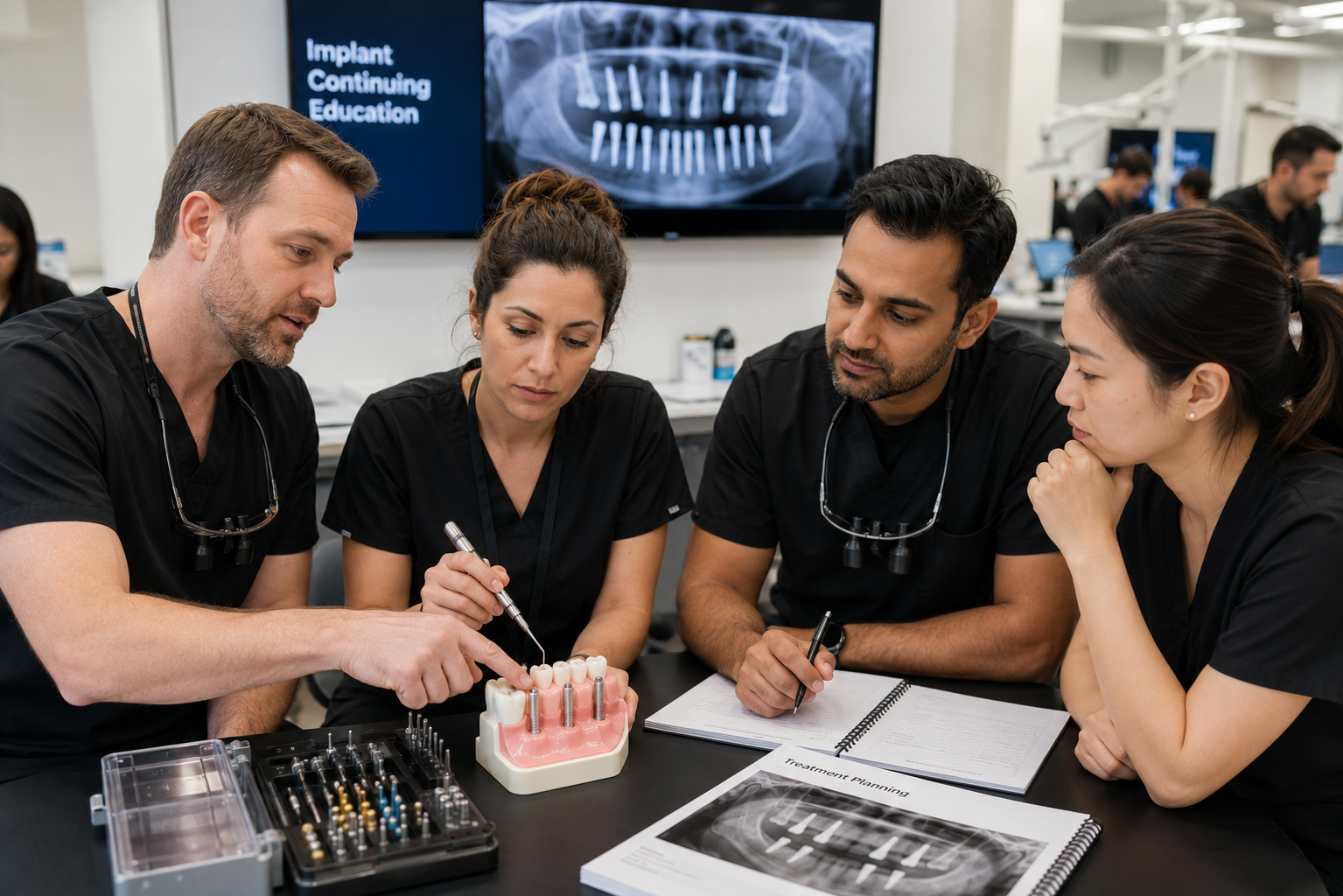
Choosing among dental implant CE courses can be a significant decision for a general dentist who wants to build knowledge in implant dentistry. A strong program should offer more than a series of lectures. The most useful training typically combines structured education with practical learning, case-planning guidance, mentorship, and opportunities to understand how implant workflows fit together.
The right program will also depend on your current experience and what you hope to learn. A dentist looking for an introduction to implant dentistry may have different educational needs from someone who already has experience with diagnosis or restorative treatment and wants to expand into surgical planning.
Before committing to a course or longer program, it helps to look closely at how the education is structured, how much practical application is included, and what kind of support is available after the formal teaching ends.
Continuing education can take many forms. Some courses are designed to introduce a specific concept in a short format, while others provide a more comprehensive pathway through different areas of implant dentistry.
For dentists developing their implant knowledge, the distinction matters. Implant dentistry involves multiple stages, from diagnosis and treatment planning through surgical and restorative considerations. Learning one isolated technique without understanding how the pieces connect may leave important questions unanswered.
That doesn't mean a longer program is automatically better. The value of a course depends on the quality and relevance of its curriculum, the learning format, the opportunity to apply concepts, and the level of guidance available.
A dentist comparing dental implant training programs should look beyond the course title and ask what the learning experience actually includes.
A clear curriculum gives dentists a logical way to build their knowledge rather than moving from one unrelated topic to another.
Look for programs that explain how individual modules fit into a broader learning progression. The curriculum should make it clear what concepts are being introduced, how they relate to one another, and how practical application is incorporated.
A structured program may address areas such as diagnosis, treatment planning, surgical principles, restorative considerations, and digital workflows. The exact content will vary between programs, so reviewing the curriculum carefully is worthwhile.
For dentists interested in a more comprehensive educational pathway, Fusion Implant Dentistry's Implant Residency Program provides a useful example of a structured approach to implant education.
The goal isn't simply to collect continuing education hours. It is to find education that makes sense for your current level of knowledge and the areas you want to develop.
Implant dentistry is highly practical, so dentists comparing a hands-on implant course with a lecture-only format should consider how much opportunity they will have to apply what they're learning.
Hands-on education can include model training, surgical planning exercises, treatment-planning discussions, and case review. These experiences can make concepts more tangible and give dentists an opportunity to work through clinical considerations rather than simply hearing them described.
Case planning is particularly valuable because implant treatment involves decisions that extend beyond the surgical procedure itself. Understanding patient assessment, implant positioning, restorative goals, and the relationship between different stages of treatment can provide important context.
The presence of hands-on training, however, shouldn't be interpreted as a guarantee that a dentist is ready to independently perform a particular procedure. Clinical experience develops over time and should be approached within the appropriate scope of education, experience, and professional responsibility.
When evaluating dental implants education, ask exactly what "hands-on" means. Does it involve models? Case planning? Surgical simulations? Clinical observation? The details matter.
A weekend course or multi-day program can provide valuable information, but questions often arise after the formal teaching has finished.
That is where ongoing feedback can become an important part of implant dentistry CE.
A dentist may benefit from having an experienced clinician available to discuss treatment-planning questions, review cases, or provide perspective as new concepts are applied in practice. The availability and structure of that support will vary considerably between programs.
If continued guidance is part of what you're looking for, explore exactly what the program means by mentorship. Is there an opportunity for case discussion? How is feedback provided? Is support available after the course, or does it end when the teaching sessions are complete?
Fusion Implant Dentistry also offers dental implant mentorship for dentists looking to incorporate ongoing guidance into their implant education.
Mentorship shouldn't be viewed as a substitute for formal education. Rather, depending on the program, it can complement structured learning by providing another setting for questions, discussion, and clinical reflection.
Modern implant dentistry involves more than understanding implant placement itself. Digital planning and guided surgery concepts can also play a role in how cases are evaluated and planned.
When comparing dental implant CE courses, consider whether the curriculum addresses how different parts of the workflow connect. Depending on the program, this may include digital records, treatment planning, surgical guides, communication between surgical and restorative stages, and other technology-supported processes.
The practical question is simple: does the course help you understand where the concepts fit within the broader workflow of implant dentistry?
It is also worth considering how the education relates to general practice. Implant treatment doesn't exist in isolation. Diagnosis, restorative planning, patient communication, and collaboration with other dental professionals can all be relevant when considering how implant dentistry fits into a practice.
Before registering for a program, take some time to look beyond the marketing language and ask specific questions about the learning experience.
A course doesn't need to include every possible component to be valuable. What matters is whether its structure and teaching approach make sense for what you're trying to accomplish.
Look for a clear curriculum, relevant practical education, case-planning instruction, knowledgeable faculty, and opportunities for feedback. The program should also align with your current experience and the specific areas of implant dentistry you want to learn more about.
Not necessarily in every situation, but hands-on learning can provide a different educational experience than lectures alone. Practical exercises may give dentists opportunities to apply concepts, work through planning scenarios, and better understand techniques discussed during instruction.
The most appropriate format depends on the dentist's goals and experience.
A CE course is generally organized around a defined educational curriculum, while mentorship focuses more heavily on ongoing guidance, discussion, and feedback. Some dentists may find that structured education and mentorship complement one another as they continue developing their knowledge.
A CE course can introduce dentists to concepts related to implant placement, including diagnosis, planning, surgical principles, and practical considerations. However, completing a course alone should not be interpreted as a guarantee of clinical readiness or independent competence. Education, experience, professional judgment, and appropriate clinical training all play a role.
A CE course may be a shorter, focused educational experience covering particular aspects of implant dentistry. An implant residency or residency-style program generally provides a more structured and comprehensive educational pathway.
The right option depends on your existing experience, learning goals, and the type of training you're looking for.
If you're comparing dental implant CE courses and aren't sure what type of education makes sense for your experience, it can be helpful to start with a conversation.
You may be looking for a focused hands-on implant course, ongoing dental implants mentorship, or a more structured residency-style learning pathway. Understanding how each option is organized can make it easier to compare programs based on your own goals rather than simply choosing the course with the most appealing description.
To learn more about the available educational pathways, contact Fusion Implant Dentistry with your questions about implant training, mentorship, or the Implant Residency Program.

Welcome to Fusion Implant Dentistry! Led by Dr. Sajid Syed, Fusion Implant Dentistry offers implant courses, mentorship, and residency programs designed to elevate your clinical expertise and operational success.