




September 20, 2026 / Dental Implant Education
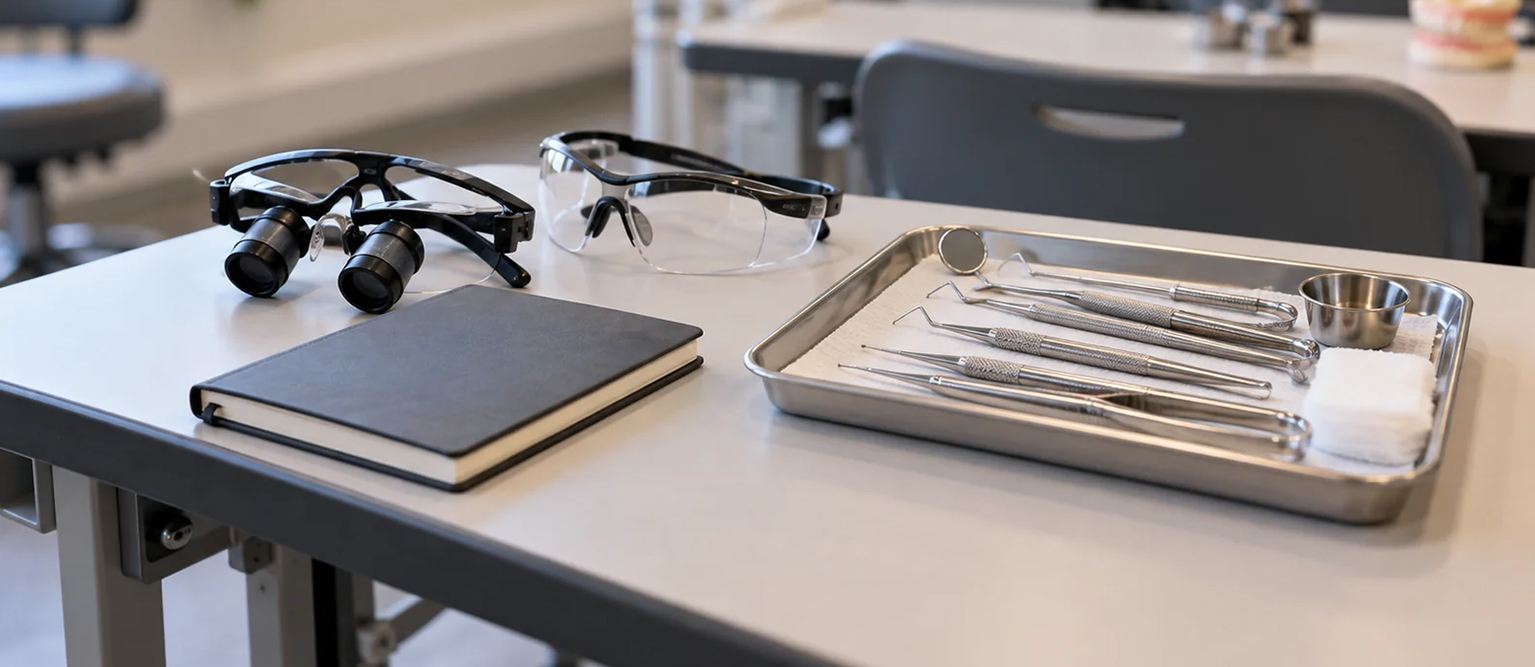
A general dentist attending a hands-on implant course should arrive with clear learning goals, questions drawn from real clinical situations, an honest view of current workflow gaps, and a reliable way to capture next steps. If the program permits case discussion, bring de-identified case notes or questions in the format requested by the provider. Confirm required attire, technology, instruments, and pre-course work directly with the organizer rather than assuming what will be supplied.
The most useful preparation is not an overpacked bag. It is a focused plan for connecting the day’s training to responsible clinical decision-making. When comparing or preparing for dental implant CE courses, review the course information carefully and identify what you want to understand, practise, or discuss before you arrive.
Preparation helps turn a busy course day into a more purposeful learning experience. Hands-on sessions may include demonstrations, model-based exercises, case discussion, digital workflows, or other practical components, depending on the program. Without a clear objective, it is easy to take extensive notes yet leave without knowing which ideas are most relevant to your practice.
A short pre-course review gives you a reference point. Consider the types of implant cases you currently see, where you refer, which stages of care feel least familiar, and what systems would need to support any future change. This does not mean deciding in advance that a particular procedure belongs in your scope. It means arriving ready to ask better questions about training, case selection, team readiness, and appropriate next steps.
Preparation also helps you distinguish what a course can provide from what it cannot. A single educational event may introduce concepts and offer supervised practice, but it should not be treated as an automatic substitute for ongoing education, mentorship, clinical judgment, or the requirements that apply in your jurisdiction.
Bring two or three specific goals that are realistic for the format of the course. Broad aims such as “learn implants” are difficult to evaluate. More useful goals might be to better understand a planning workflow, identify questions to ask during case review, or see how a particular stage is demonstrated in a supervised setting.
Write the goals down before the course. At the end of the day, revisit them and record what was clarified, what remains uncertain, and what additional learning or supervision may be appropriate.
Prepare a concise list of questions based on situations you have encountered or expect to encounter. Keep the questions focused on decision points rather than asking for a universal rule.
Examples include:
Prioritize the questions that are most relevant to the announced course objectives. A focused list is easier to use than a long catalogue of unrelated concerns.
If the provider welcomes case discussion, follow its instructions about what may be submitted or brought. Protect patient privacy and do not carry identifiable records into an informal learning environment. A concise, de-identified summary of the clinical question may be more useful than a large, unstructured file.
If case material is not permitted, bring a list of general patterns or decision points you want to understand. Never assume that an instructor can provide patient-specific advice without the appropriate records, context, consent, and professional relationship.
Hands-on learning connects to more than a clinical technique. Before attending, map the current workflow in your practice from initial conversation through referral, planning, coordination, documentation, and follow-up. Note where the team lacks clarity or where information tends to be delayed.
This exercise may reveal that your most important course questions involve systems rather than instruments. For example, you may need to understand how new learning would affect scheduling, team roles, patient communication, laboratory coordination, digital records, or referral relationships.
Bring a notebook, tablet, or course-approved device and divide your notes into three categories:
This structure keeps observations separate from decisions. A useful idea heard in a course is not automatically ready for implementation. Record the evidence, training, support, and approvals that would be needed before changing a clinical or operational process.
Start with the course provider’s own materials. Review the stated audience, objectives, format, schedule, required preparation, and any instructions about attire, technology, case submission, or equipment. If details are unclear, ask the organizer directly.
It can also help to review:
Fusion Implant Dentistry’s Implant Residency Program describes a broader structured pathway that includes hands-on model training, live patient surgery, digital integration, business systems, and ongoing mentorship. Reviewing the difference between an individual event and a longer learning pathway can help you frame realistic expectations for the course you are attending.
Do not bring patient-identifying information unless the provider has established an appropriate, secure process and specifically instructed you to do so. Do not bring personal instruments, materials, or clinical equipment unless they appear on the official requirements list. Unrequested items may be unnecessary or unsuitable for the course setup.
Just as important, do not arrive with assumptions such as:
Course participation and clinical readiness are different questions. Your next step should reflect your education, supervised experience, professional responsibilities, local requirements, and individual judgment.
Active participation begins before the first exercise and continues after the course. During the session, compare each concept with your written goals. Ask concise questions at appropriate times, take notes in your own words, and distinguish demonstrated principles from patient-specific recommendations.
When permitted, observe how the instructor organizes the workflow—not only the isolated task. Pay attention to how information is gathered, how decisions are explained, what checkpoints are used, and where additional expertise may be needed. Those process observations can be valuable even when a technique is not ready to be incorporated into your practice.
After the course, schedule time to review your notes while the material is fresh.
Create a short action plan that may include:
Dentists who want ongoing support after an event may also explore dental implant mentorship. Mentorship can provide a different learning relationship centred on case-based guidance and continued discussion. It should be evaluated according to the dentist’s goals, experience, responsibilities, and the details of the specific program.
Bring clear learning goals, a prioritized question list, course-approved notes or de-identified case questions, and a dependable way to record follow-up actions. Use the provider’s instructions as the definitive packing list for attire, devices, instruments, materials, and pre-course work.
Only bring or submit case information if the course provider explicitly allows it and gives a secure, privacy-appropriate process. Follow all applicable professional and privacy obligations. If case review is not part of the program, bring general, non-identifying questions instead.
Experience requirements depend on the specific course. Review the published audience and prerequisites, then ask the provider if your background is a suitable match. Do not assume that “hands-on” means introductory or advanced.
A course is generally a defined educational event, while mentorship usually involves continuing guidance or case-based discussion over time. The exact format varies by provider. Compare the stated objectives and support model rather than assuming one option replaces the other.
Review your notes, identify unanswered questions, and decide what further education, supervision, mentorship, or systems work is appropriate before changing practice. Course completion alone should not be treated as proof of competency or readiness for independent treatment.
Fusion Implant Dentistry in St. Catharines offers events, implant residency training, and mentorship pathways for general dentists. Review Fusion’s upcoming education information, compare the formats with your current goals, and use the published course details to prepare specific questions.
If you would like to ask which available learning pathway may fit your experience and objectives, contact Fusion Implant Dentistry. Program details, suitability, availability, and requirements should always be confirmed directly before registering or making plans.

Welcome to Fusion Implant Dentistry! Led by Dr. Sajid Syed, Fusion Implant Dentistry offers implant courses, mentorship, and residency programs designed to elevate your clinical expertise and operational success.